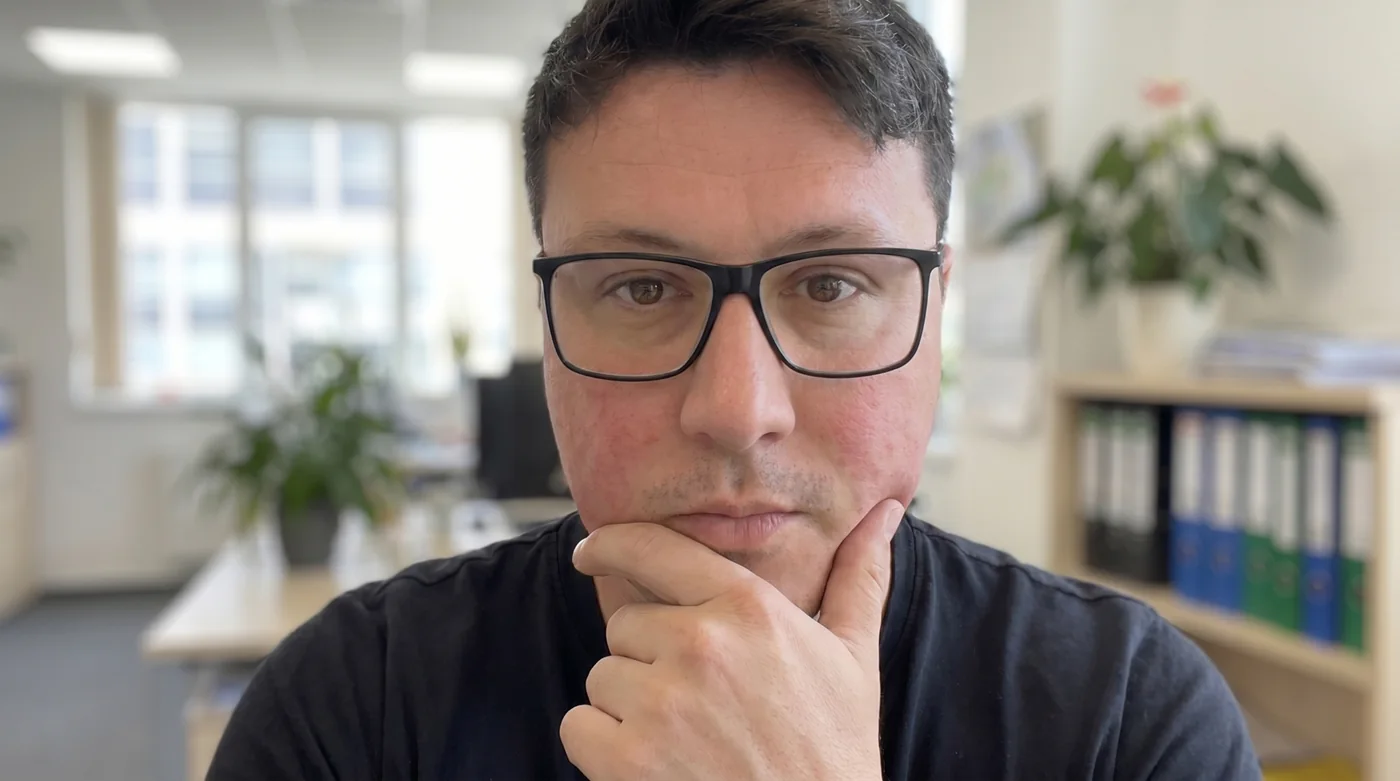
I’ve lived with rosacea for years, so I know the frustrating part firsthand: it rarely behaves the same way two days running. One morning my skin is calm; the next, my cheeks are burning and there’s no obvious reason why. I spent a long time blaming the wrong things — a new cream, the weather, bad luck — before I worked out that the single most powerful thing I could do wasn’t a product at all. It was information: knowing my triggers, in my skin.
That realisation is the reason I eventually built a rosacea app, but you don’t need one to start. This guide walks through exactly how to track rosacea flare-ups, the triggers worth watching for, how long to track before you can trust the data, and the honest pros and cons of a paper diary versus an app. It’s the method I wish someone had handed me on day one. By the end you’ll have something you can start tonight.
Why tracking is the most useful thing you can do for rosacea
Rosacea triggers are deeply individual, and that took me a while to accept. A glass of red wine wrecks my skin; a friend of mine with rosacea drinks it happily and flares on hot weather instead. Some of the most common triggers affect roughly three-quarters of people with rosacea, while others affect only a small minority — so the generic “rosacea diet” lists I kept reading only got me so far. The goal isn’t to avoid everything; it’s to find your short list of repeat offenders.
The payoff is real, and I’ve felt it. Research compiled by the National Rosacea Society has found that adjusting diet reduces symptoms in around 95% of cases where food was a trigger, and stress-management techniques help in roughly two-thirds of stress-related cases. That’s why dermatologists often ask patients to identify their triggers before starting treatment — even effective medication works better when you’re not constantly pouring fuel on the fire. Once I knew mine, the prescription my dermatologist gave me finally seemed to do its job.
There’s a second, quieter benefit. Rosacea tends to worsen over time if it’s left unmanaged: repeated flushing can leave skin red for longer, and over years that redness can become more permanent. Catching your patterns early is one of the few things genuinely within your control.
The most common rosacea triggers to watch for
Rosacea flares happen when the blood vessels in your face overreact, dilating quickly and driving an inflammatory response. Most triggers fall into a handful of buckets. Use this as your starting checklist, not a list of things to fear.
Flushing triggers (often flare within minutes):
- Sun and UV exposure — one of the most common and best-documented triggers
- Heat: hot weather, hot showers, saunas, sitting near a fire
- Hot drinks (temperature often matters more than the caffeine)
- Alcohol, especially red wine
- Spicy food
- Emotional stress and anxiety
- Sudden temperature swings (a hot shower into cold air is a classic setup)
- Strenuous exercise in a warm environment
Irritant triggers (a sensitive skin barrier reacting):
- Harsh or foaming cleansers and over-exfoliation
- Fragrance and essential oils, including “natural” scented products
- Menthol, camphor, and high-strength actives
- Hair sprays and styling products that drift onto the face
Less obvious triggers worth logging:
- Sugary drinks and refined carbs (blood-sugar spikes can drive inflammation)
- Dairy, for some people
- Certain medications, including some vasodilators and topical steroids — never stop a prescribed medication without talking to your doctor first
One thing the lists rarely mention, and the thing that fooled me longest: triggers stack. A warm room plus social stress plus a glass of wine flares me when none of those alone would. For ages I’d blame whichever one I noticed last. Symptoms can also lag hours behind the cause, so the curry I’d eaten at lunch would surface as a flare in the evening and I’d pin it on the wrong thing entirely. That’s exactly why memory isn’t enough, and why writing it down works.
How to actually track your flares: the 2–4 week method
You don’t need anything fancy to start… I began with the notes app on my phone. What you need is consistency. Here’s the method dermatologists and patient organisations broadly agree on, and the one I still use.
- Log daily for at least 2–4 weeks. A single bad day tells you nothing; patterns emerge over weeks. Track every day, including the calm ones — calm days are data too, because they show you what wasn’t happening.
- Record the context, not just the symptom. For each entry, note what you ate and drank, the weather and temperature, your stress and sleep, exercise, and any new skincare or makeup. When a flare hits, write down its severity and how long it lasted.
- Take a daily photo in consistent light. Redness is notoriously hard to judge from memory or in a bathroom mirror at night. A dated photo timeline shows real change — both flares and the slow improvement when something is working.
- Change one thing at a time. Once you have a suspect, test it deliberately. Drop it for one to two weeks, return to a minimal routine, then reintroduce it on its own. Changing five things at once tells you nothing about which one mattered.
- Look for coincidence, then confirm. After a few weeks, line up your worst days against your notes. The triggers that keep showing up are your short list. Confirm them one by one rather than trusting the first correlation.
Paper diary vs. rosacea app: which actually works better?
Plenty of people swear by a notebook on the desk, and there’s nothing wrong with paper, the best tracking method is the one you’ll actually keep up. I’ll be honest: pulling out a phone, unlocking it, and typing in every meal can feel like more friction than it’s worth, and that’s a fair criticism. I gave up on tracking more than once for exactly that reason.
But once I stuck with it, paper kept hitting the same walls for me:
- It can’t compare photos over time. A side-by-side of week one versus week four is one of the most motivating things you can see, and a notebook just can’t do it. My memory of “how bad was it last month” was always wrong.
- It can’t spot patterns for you. With weeks of stacked, lagging triggers, eyeballing a notebook is genuinely hard — I missed connections that were sitting right there.
- It’s not built to share with your dermatologist. Handing over a messy notebook in a 10-minute appointment rarely lands.
- It’s not private in the way I wanted. A flare diary is personal. A notebook on a desk isn’t locked.
That gap is exactly why I built RosaceaWise. I wanted something that made logging take seconds, kept my photos in a timeline, and surfaced the patterns I kept missing on paper. It keeps your flares, calm days, photos, food and stressors, and notes in one private diary on your iPhone. Nothing is sold or shared. I built it as a private diary first, because that’s what I’d have wanted handed to me years ago.
Turn your tracking into a better dermatologist visit
Here’s where tracking quietly pays off the most, and where it changed things for me. The average dermatology appointment is short, and “my skin’s been bad lately” is hard to act on — I used to walk out of mine feeling like I’d wasted both our time. A few weeks of structured data turns that into something a clinician can actually use: when flares happened, how severe, what preceded them, and photos showing the trend.
RosaceaWise generates a dermatologist visit brief from your diary — a clean summary of your flares, suspected triggers, and photo timeline that you can bring to your appointment. The first time I brought one in, the conversation was completely different: focused, specific, and far more productive.
What to do once you know your triggers
Finding your triggers is the hard part. Acting on them is mostly common sense:
- Don’t avoid everything. Start with the one or two triggers that reliably flare you. Quality of life matters.
- Protect daily. Broad-spectrum SPF 30+ every morning; mineral (zinc/titanium) sunscreens are often better tolerated. A wide-brimmed hat and shade during peak sun help too.
- Simplify your routine. A gentle, fragrance-free cleanser and moisturiser, introduced one product at a time with a patch test.
- Plan around heat. Warm (not hot) drinks sipped slowly, cooler exercise with recovery breaks, and avoiding rapid hot-to-cold swings.
- Pace alcohol and spice rather than cutting them entirely, if they’re triggers — alternate alcohol with water; reduce spice level before removing it.
When to see a dermatologist
Tracking and trigger control are powerful, but they aren’t always enough. Consider professional care if:
- Your redness or bumps are persistent and aren’t responding to lifestyle changes
- You have gritty, dry, irritated or painful eyes (possible ocular rosacea) — eye symptoms warrant prompt attention
- You have severe burning or stinging, which can signal a damaged barrier or a different diagnosis
- You think a topical steroid may have worsened your facial redness
Prescription treatments and light-based therapies like laser or IPL can reduce redness and inflammation, but trigger management remains the foundation everything else builds on.
Start tracking tonight
You can begin with a notebook tonight — and if that works for you, brilliant, genuinely. But if you want the photo timeline, the pattern-spotting, the privacy, and a ready-made brief for your next appointment, that’s exactly what I built RosaceaWise to do. It’s the tool I needed and couldn’t find.
RosaceaWise is out now on the App Store — track flares, calm days, photos, notes, and visit briefs in one private rosacea diary for iPhone. Try it free for 7 days.
Frequently asked questions
How long should I track my rosacea before I can trust the results? Track daily for at least two to four weeks. Patterns rarely show up in a few days, especially because triggers stack and symptoms can lag hours behind the cause. Once you have a suspect, confirm it by removing and reintroducing it one at a time.
What’s the best way to track rosacea food triggers? Log everything you eat and drink alongside your flares, then look for foods that repeatedly appear before bad days. Common food and drink triggers include alcohol (especially red wine), very hot drinks, spicy food, and for some people dairy or sugary drinks. Test one suspected food at a time rather than cutting many at once.
Is there an app for tracking rosacea? Yes. RosaceaWise is a private rosacea diary for iPhone that lets you log flares, calm days, photos, food, and stressors, then surfaces patterns and generates a dermatologist visit brief. It’s available now on the App Store with a 7-day free trial.
Can a rosacea app cure rosacea? No. Rosacea is a chronic condition with no cure, and no app or tracker treats it directly. What tracking does is help you identify and reduce your personal triggers and have more productive conversations with your dermatologist — which is one of the most effective ways to reduce how often you flare.
Is my data private if I track rosacea on an app? It depends on the app, so check the privacy policy. RosaceaWise is built as a private diary — your entries and photos are yours, and nothing is sold or shared.
Do I have to give up wine, coffee, and spicy food? Not necessarily. Triggers are individual, and the goal is to find your specific offenders rather than eliminate everything. Many people can keep favourites by reducing the dose, slowing the pace, or lowering the temperature or spice level.
This article is for general information and is not medical advice — it reflects my own experience living with rosacea, and rosacea varies a lot from person to person. For diagnosis and a treatment plan, see a qualified dermatologist or doctor.

Ivan Petričević
Ivan is a journalist of nearly two decades, writing about science and the wider world for Večernji list and founding Kozmos.hr, Croatia's first popular-science portal. He also has rosacea — and built RosaceaWise from that lived experience, to make tracking flares calmer and dermatologist visits clearer. He reads the research and lives the reality.
Follow RosaceaWise on Instagram